Are Printed Modal Hijabs See-Through? An Opacity Guide for Wholesale Buyers
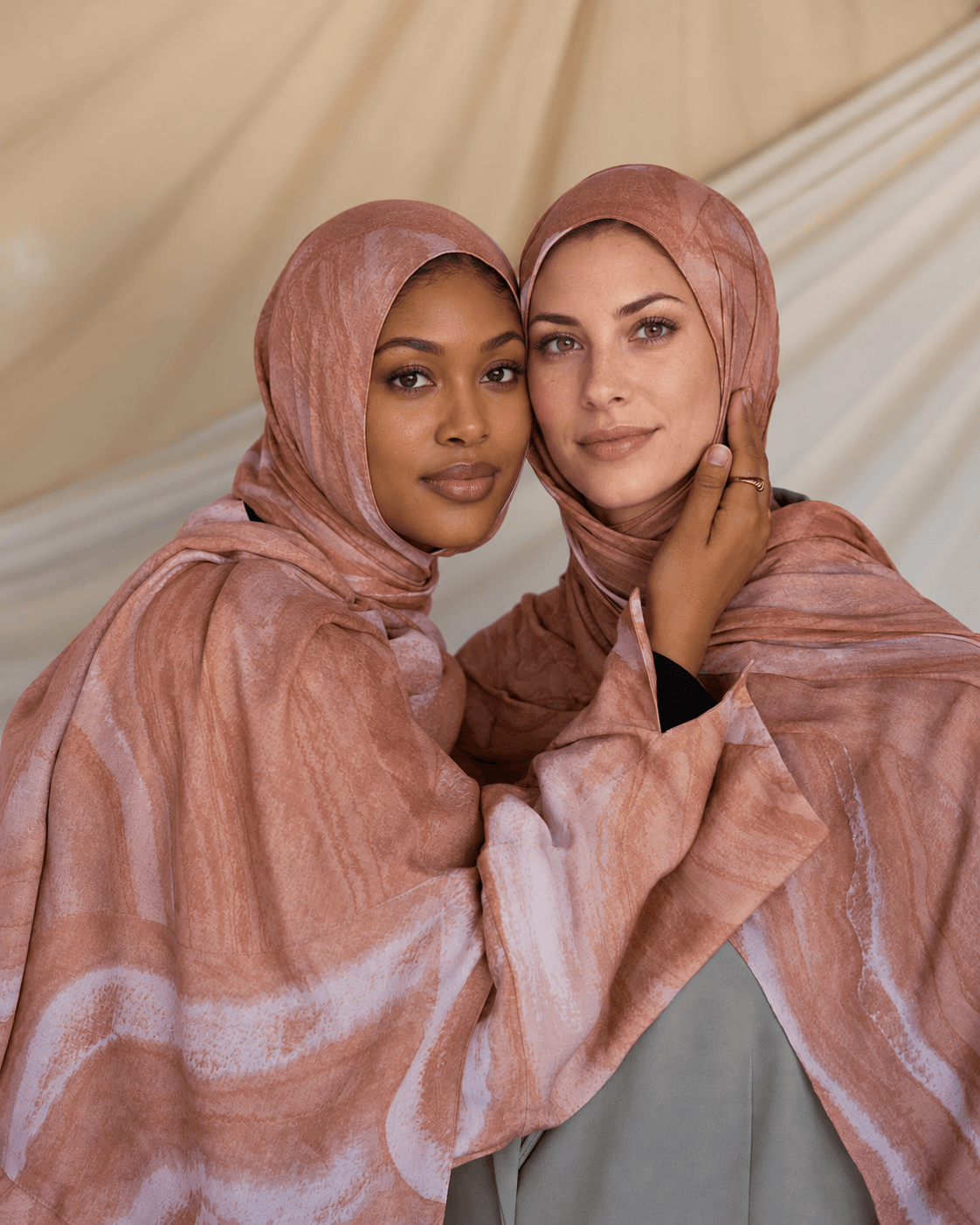
Printed modal hijab opacity cannot be answered reliably by the word modal or by one product photograph. Buyers must evaluate the exact fabric and every important colorway in a relaxed single layer, under use-relevant tension and in the intended wrap, using consistent backgrounds and lighting. If coverage depends on an undercap or extra layer, say so clearly.
Printed modal hijab opacity changes across one design
Printed scarves can contain a dark field, pale border, unprinted ground and transitions within one piece. Those zones absorb, reflect and transmit light differently, so a buyer should not assign one opacity judgment after looking only at the darkest area. Map the highest-risk regions and include them in every sample review.
Base construction, weight, finish and print route can affect appearance, but none should be assumed from the modal name. Request available material details and identify the submitted quality. Confirm exact composition, weight and performance before making a retail claim; this guide deliberately supplies no universal figures.
| Variable | Higher-risk observation | Buyer action |
|---|---|---|
| Color | Pale ground or low-contrast motif shows background | Test every key colorway and palest area |
| Layer | Single layer reveals hair or undercap contrast | Record single and intended wrap |
| Tension | Face or neck shaping opens construction | Use a controlled, relevant tension check |
| Light | Backlighting increases show-through | Review agreed normal and challenging conditions |
Test relaxed, tensioned and wrapped conditions
Start with a conditioned sample placed without stretch over consistent light and dark contrast cards. Photograph with locked exposure and white balance, and record the light source, distance and orientation. Then apply a repeatable gentle tension appropriate to the construction; do not pull arbitrarily hard simply to create failure.
Finally, style the scarf as customers are expected to wear it. Review the forehead, side of face, crown, neck and chest from multiple angles. State the number of layers. A double fold at the face may conceal what remains visible through a single-layer tail, while gathering can make another area appear denser.
- Identify sample, fabric and colorway
- Mark pale, mid and dark print zones
- Use consistent contrasting backgrounds
- Record relaxed single-layer appearance
- Apply the agreed use-relevant tension
- Review the intended wrap from front, side and back
- Repeat with the intended undercap where relevant
- Keep settings, photographs and physical sample
Use lighting that reflects purchase and wear
A scarf may look covered under soft indoor light and more translucent near a bright window or with light behind the wearer. Set a principal condition relevant to retail and normal wear, then add a reasonable challenge condition. Avoid judging under uncontrolled changing daylight without recording it.
Cameras can exaggerate or conceal show-through through automatic exposure and contrast. They are useful documentation only when settings are controlled and the physical observation is recorded. Consumer comments and public reviews can reveal that coverage matters, but they are not laboratory results for your proposed product.
Choose backgrounds deliberately
Use both light and dark backgrounds so high contrast is visible. Where the target wearer population includes varied skin tones and undercap colors, include representative comparisons without claiming one test simulates every person.
If a specific opacity claim is commercially critical, ask a qualified textile laboratory or adviser about a suitable method and acceptance criterion. Internal visual checks support development but do not automatically substantiate every marketing or contractual statement.
Evaluate undercaps and layering honestly
An undercap can reduce contrast from hair, secure the scarf and change comfort, but its color and surface matter. Test the actual type recommended by the brand. A light undercap may blend with a pale scarf while a dark one makes open areas more visible; the reverse may happen in dark styling contexts.
Do not market a product as universally opaque if acceptable coverage in the tested setup required an undercap or multiple wraps. Product copy and styling imagery should explain the recommended system. That clarity reduces returns and helps boutiques advise customers rather than promising performance the sample did not demonstrate.
| Sales wording | Evidence needed | Safer action |
|---|---|---|
| Opaque | Defined conditions and appropriate verification | Qualify by color/layer when needed |
| No undercap needed | Representative wear testing of exact product | Avoid if results vary |
| Lightweight | Confirmed product data and context | Do not imply opacity from the term |
| Same coverage in all colors | Colorway-level evidence | Approve and describe shades separately |
Carry opacity approval into bulk
Sign or otherwise identify the approved physical sample and specification. If the range has many colors, define which are checked individually and ensure the palest or highest-risk shades are represented. Agree production sampling across lots or cartons and record deviations against the same setup.
Opacity can also change after care if dimensions, surface or print appearance changes. Include the intended care process in development and reassess the washed sample after consistent conditioning. Formal limits, wash cycles and test methods should be selected for the project with appropriate technical input, not invented from a general article.
- Approved physical control by relevant colorway
- Documented light, background, layer and tension setup
- Bulk lot and carton traceability
- Representative production sampling
- After-care comparison where required
- Clear disposition for unacceptable variation
Ask opacity questions in the RFQ
Send the print files or design direction, colorways, modal-base quality request, intended dimensions, styling and layer expectation, undercap position, quantities, labels, packaging and destination. Highlight pale designs and borders so they are not overlooked during sampling.
The Earthwash colorway set is useful for discussing light, mid and dark risk, while Midnight Botanical illustrates contrast between a dark field and light border. Exact material, dimensions, MOQ, price, timing and test scope require supplier confirmation after the brief is reviewed.
FREQUENTLY ASKED
Buyer FAQ
Are all printed modal hijabs see-through?
No universal answer is reliable. Show-through depends on the exact construction, color, print coverage, tension, lighting, background, layers and styling. Test the proposed sample.
Do dark printed areas improve opacity?
They may provide more visual masking than pale areas, but color alone does not prove coverage. Evaluate dark and pale zones under the same documented conditions.
Should wholesale buyers test opacity with an undercap?
Yes if customers are expected to use one, but also record the scarf’s single-layer behavior. Disclose when an undercap or extra wrap is recommended for coverage.
Can a product photo prove printed modal hijab opacity?
No. Lighting, backgrounds, styling and camera processing affect the image. Use controlled physical checks and suitable formal testing when a claim requires it.
Related buyer resources
Research basis
This guide converts recurring public consumer questions, review themes and supplier-FAQ topics into buyer verification actions. Public comments are observations, not technical proof about every product.