Private Label Hijab Manufacturing: MOQ, Samples, Labels and Packaging
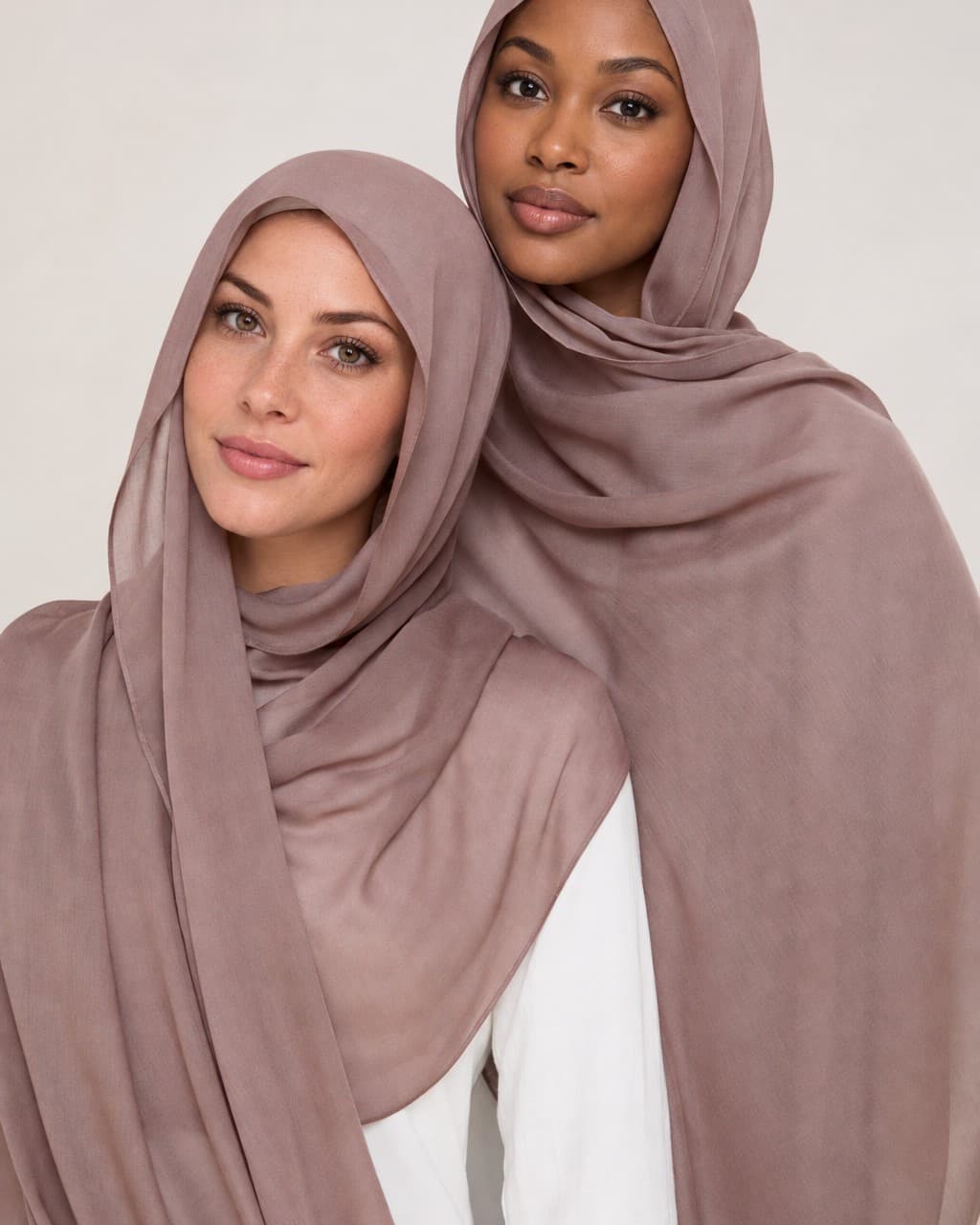
A productive private-label hijab enquiry gives the manufacturer enough information to price and assess feasibility: product and fabric direction, finished dimensions, colors and quantity by color, edge construction, labels, packaging, quality expectations, destination and target timing. MOQ is not one universal number; it changes with fabric sourcing, dyeing or printing, color count and custom components.
Why MOQ answers vary
Wholesale supplier FAQs repeatedly address MOQ because buyers need an early feasibility signal. Yet a stock-color scarf with a standard package is a different project from a custom-dyed fabric, exclusive print, woven label and printed gift box. Each material or process can have its own economic minimum.
Ask the supplier to break down the constraint. Is the minimum driven by fabric, dye lot, printing, cutting, label production or packaging? Can colors share a base quality? Are stock materials available? The answer may reveal a practical route without pretending that a generic MOQ applies.
| MOQ driver | Question to ask | Possible planning response |
|---|---|---|
| Fabric availability | Is the quality stocked or made for the order? | Compare stock and custom routes |
| Color process | Is each shade a separate minimum or lot? | Prioritize fewer launch colors |
| Print/artwork | What setup and repeat constraints apply? | Finalize artwork before costing |
| Labels/packaging | Does each component have its own minimum? | Use compliant standard packaging initially if suitable |
Build a hijab tech pack suppliers can quote
A tech pack is the shared source of truth. Give it a document name, date and revision. Use drawings and close-up references, but state whether an image is inspiration or a required construction. Remove conflicting old files from the approval thread.
Avoid unsupported composition, performance or compliance claims. If composition is not confirmed, ask the supplier to identify the proposed quality and plan verification appropriate to your market. If dimensions, MOQ or tolerances are open, mark them for confirmation rather than filling the gap with an invented value.
- Style code and product description
- Fabric direction and approved-quality reference status
- Finished length, width and measurement method
- Color codes and physical-standard status
- Edge, seam, corner, print and embellishment details
- Label artwork, content, material, dimensions and placement
- Unit packaging, inserts, barcode and carton requirements
- Care instruction pending validation
- Quality tests and inspection expectations
- Quantity by style/color and destination
- Target schedule marked subject to feasibility
Plan sampling in decision gates
Do not treat one sample as approval of everything. Early material swatches can establish hand, drape and color direction. A development sample tests dimensions and construction. Label and packaging proofs verify artwork and placement. A final pre-production sample should represent the agreed complete product as closely as feasible.
Name every submission and list what it is intended to approve. If a sample uses substitute fabric or trim, document that limitation. Consolidate comments into one numbered response with photos and measurements, and distinguish required correction from preference.
| Gate | Purpose | Do not assume |
|---|---|---|
| Material/swatches | Compare fabric, hand and preliminary colors | Finished construction is approved |
| Development sample | Review dimensions, drape, edge and use | Bulk color/labels are approved |
| Artwork/proofs | Check content, scale and placement | Physical color is exact from a screen |
| Pre-production | Confirm complete specification | Bulk remains compliant without controls |
Specify labels correctly
Private label can involve a brand label, care/content label, hangtag, barcode or size/traceability element. State the type, finished dimensions, fold, material direction, colors, attachment, seam location and orientation. Supply vector artwork or the format requested by the maker and convert fonts appropriately while retaining editable originals.
Label content is not merely decorative. Fiber, care, origin, business identification and language requirements vary by destination and sales channel. Obtain qualified advice for your market and verify supplier declarations. Do not print a fiber composition or certification logo before evidence is available.
- Exact approved wording and language
- Artwork revision and color reference
- Finished size, fold and cut
- Placement measured from a defined edge
- Attachment method and thread appearance
- Legibility after care
- Destination-market review
- Barcode ownership and scan check where applicable
Design packaging for protection and compliance
Packaging should protect the product through storage and international transport while fitting the brand and local rules. Define the fold, tissue or insert, bag or band, sealing, warning text if applicable, barcode position and how units are grouped. Test whether printed material transfers color, sharp components snag fabric or compression creates lasting marks.
For cartons, define assortment, unit count logic, carton marks and lot separation. Ask the logistics parties for destination, routing and handling requirements. Sustainability claims should be specific and substantiated; avoid broad language based only on appearance or a supplier’s informal description.
| Layer | Buyer decision | Verification |
|---|---|---|
| Product fold | Presentation and crease tolerance | Packed-product trial |
| Unit pack | Protection, labeling and barcode | Artwork proof and physical sample |
| Inner/master carton | Assortment and traceability | Packing list and carton marks |
| Transit | Route and handling risks | Appropriate packaging/shipping review |
Confirm quality and commercial terms
Attach critical quality points to the purchase agreement: approved fabric and color references, dimensions, workmanship, care performance, inspection plan and agreed test scope. Define who approves, when approvals are due and how deviations are handled. A clear process is more useful than broad language such as “top quality.”
Request project-specific confirmation of MOQ, sample charges, price basis, payment terms, production timing after approvals, Incoterm, packing assumptions and quotation validity. Timing should remain unconfirmed until material availability, customization, approvals and capacity are reviewed. Likewise, international freight timing is route- and date-specific.
Send an RFQ that can receive a useful answer
Introduce your business type and target market, then attach the tech pack and quantity breakdown. Highlight open decisions and ask the manufacturer to identify feasibility risks or alternatives. Include the ship-to country and, if known, city or port so logistics discussions are grounded.
A serious enquiry does not need to pretend every detail is final. It needs to distinguish confirmed requirements from questions. That gives a custom hijab manufacturer room to propose viable options while preserving a record of what must be approved before bulk.
- Business and market overview
- Style list and tech pack revisions
- Quantity by style and color
- Fabric and color approval status
- Custom label/tag/packaging files
- Required sampling sequence
- Quality, testing and inspection expectations
- Destination and preferred trade-term discussion
- Target date clearly marked for feasibility confirmation
- Named contact for consolidated approvals
FREQUENTLY ASKED
Buyer FAQ
What is the MOQ for private label hijabs?
There is no reliable universal figure. MOQ depends on the fabric route, color or print process, number of variants, labels, packaging and supplier setup. Send a complete quantity breakdown for project-specific confirmation.
Can a manufacturer add custom labels, tags and packaging?
Many suppliers discuss these services, but availability, minimums, cost and timing must be confirmed for your project. Provide artwork, dimensions, materials, placement and destination requirements.
What should be in a hijab tech pack?
Include style identity, fabric direction, finished dimensions, colors, construction, edges, labels, packaging, care-validation plan, quality requirements, quantity and revision control.
How many samples are needed before bulk?
Use as many decision gates as the project risk requires: material/color submissions, development samples, artwork or packaging proofs and a complete pre-production approval are common categories. Confirm the exact workflow with the supplier.
Who handles international shipping and import compliance?
Responsibilities depend on the agreed trade term and destination. Confirm importer duties, documentation, labeling, testing and freight arrangements with qualified logistics and regulatory advisers before ordering.
Related buyer resources
Research basis
This guide converts recurring public consumer questions, review themes and supplier-FAQ topics into buyer verification actions. Public comments are observations, not technical proof about every product.